The world is divided not only by mountains and rivers, but by the borders of power. Hundreds of banners snap in the wind, yet only a few carry real weight. The rest are shadows, reflections, or the ash of what came before.
The great factions
Four major powers hold the world in a tense balance. Their lands run for thousands of leagues, their armies number in the tens of thousands, and their palaces are nests of intricate political intrigue.
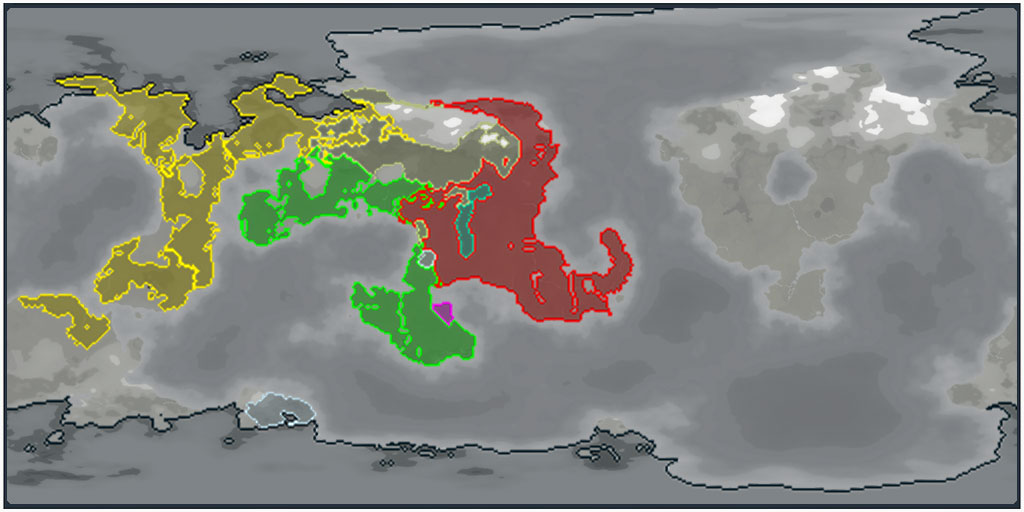

A grim, militarised state where power passes along ties of blood. A religion built on the cult of fire sits at the centre of its society.

A loose union of city-states, each living by its own laws and traditions, held together by respect for nature and a hunger for knowledge.

A mighty power that has swallowed nearly every human people and is still expanding. As everyone knows, an empire has no borders.

A land of everlasting cold and death, ruled by lich necromancers – collectors of this world’s “riddles”. Home to the cult of the Eternal god Erlik, god of the afterlife.
The minor kingdoms
Between the giants, the minor kingdoms huddle. Their few cities hold on through stubbornness and loyalty.
The kingdom of the Dragonids, for instance, or Gatara.
The dead kingdoms
A dead kingdom is not just an empty space on the map. They left ruins behind them, forgotten languages, weapons that still remember the war.
The dwarven kingdom, for instance. Their stone fortresses are silent now, and their descendants wander the world with no home, keeping the old pride.